We've moved! Please subscribe to the Google Marketing Platform blog for updates


Posted:
As a brand trying to reach consumers in today’s increasingly fragmented media landscape, it is critical that you understand the impact of your ads on brand metrics such as awareness and consideration.

Viewability is the starting point, an initial understanding of whether the ad had a chance to be seen. We have talked before about why measuring the viewability of advertising matters.

In December 2014, we shared insights on the state of display ad viewability across the web. As a continuation of that effort, in May we released new insights from our video ad platforms, including YouTube, to start the discussion about the state of video ad viewability.


We wanted to take this research a step further, by analyzing the relationship between viewability and brand metrics.

To do so, we took our Brand Lift solution, which gives you insights into what impact your ads have on the consumer journey - from awareness, to ad recall, to brand interest - and tied the data to viewability metrics from our Active View technology for a set of YouTube TrueView ads. By connecting these two solutions, we were able to draw out some insights about the relationship between viewability and brand metrics.

Sight, sound and motion combined drive higher lift

When it comes to brand metrics, ad recall is a foundation for measuring the impact of your ad. As a brand advertiser, knowing if your ad breaks through with users is a key first step to understanding the overall impact of an ad on a suite of brand metrics. In this analysis, we were able to analyze how being able to hear and see your ad affected a user’s ability to recall your ad.

Our data shows that users exposed to even one aspect of your video ad (audio or video only), exhibit significant lift in ad recall. However, the full immersive experience of sight, sound and motion delivers more ad recall than either audio or video alone. In fact, the impact on ad recall was 23% higher when users were exposed to ads with audio and video together versus ads with just audio alone.

The longer in view, the better you do (on brand metrics)

Time in view also plays a large role when it comes to moving the needle on brand awareness and consideration. We recently introduced the ability for Active View users to measure average viewable time - the average time, in seconds, a given ad appeared on screen - in Doubleclick Bid Manager. By connecting these measurements, we can see the relationship between viewable time and brand metrics.

We found that there is a consistent relationship between how long an ad is viewable and increases in brand awareness and consideration. The longer a user views your ad, the higher the lift in these two important brand metrics:


What the results mean for your brand

These results prompt you to think about your brand advertising in a few important ways:
  • Are users viewing your creative for longer periods of time? Brand metrics continue to get higher the longer a user views your ad.
  • Are you buying the right media to have an impact on brand metrics? YouTube’s opt-in TrueView ads are uniquely suited to deliver long-form video content at scale for brand advertisers.
  • Finally, are you thinking beyond viewability to capture effectiveness metrics? You want your ads to move consumers at the moments that matter, and measuring the impact on brand metrics will make for more effective ad spend.
This is just the beginning of understanding what impacts brand metrics for video ads. As brands look to measure the effectiveness of their digital video advertising, a continued understanding of what factors drive brand metrics will be crucial to more effective brand spend.

Read further research on the impact of online video.

To read all of our research on viewability, check out thinkwithgoogle.com/viewability.

To see how viewability is measured, visit our interactive Active View demo.
Posted by Sanaz Ahari
Group Product Manager, Brand Measurement, Google

Posted:
At YouTube, over the past few years we’ve heard from clients that they want to access our marquee formats, such as TrueView, through programmatic channels. We’ve been investing to make that happen and recently made TrueView ads, which represent 85% of YouTube in-stream ads, available programmatically in DoubleClick Bid Manager (DBM). Clients have been pleased with the performance: those buying TrueView this way are already seeing higher engagement and view-through rates than with other video ad formats.

To continue improving the YouTube advertising experience for as many of our clients as possible, we’ll be focusing our future development efforts on the formats and channels used by most of our partners. To enable that, as of the end of the year, we’ll no longer support the small amount of YouTube buying happening on the DoubleClick Ad Exchange.

With this change, we’ll be able to invest even more in creating the best and most effective YouTube advertising and buying experiences possible, continuing our efforts in TrueView and offerings like Google Preferred. Video advertising and programmatic buying are growing rapidly and being focused in our investments will help us drive them forward at an even faster rate.
Posted by Neal Mohan
VP, Display & Video Advertising, Google

Posted:
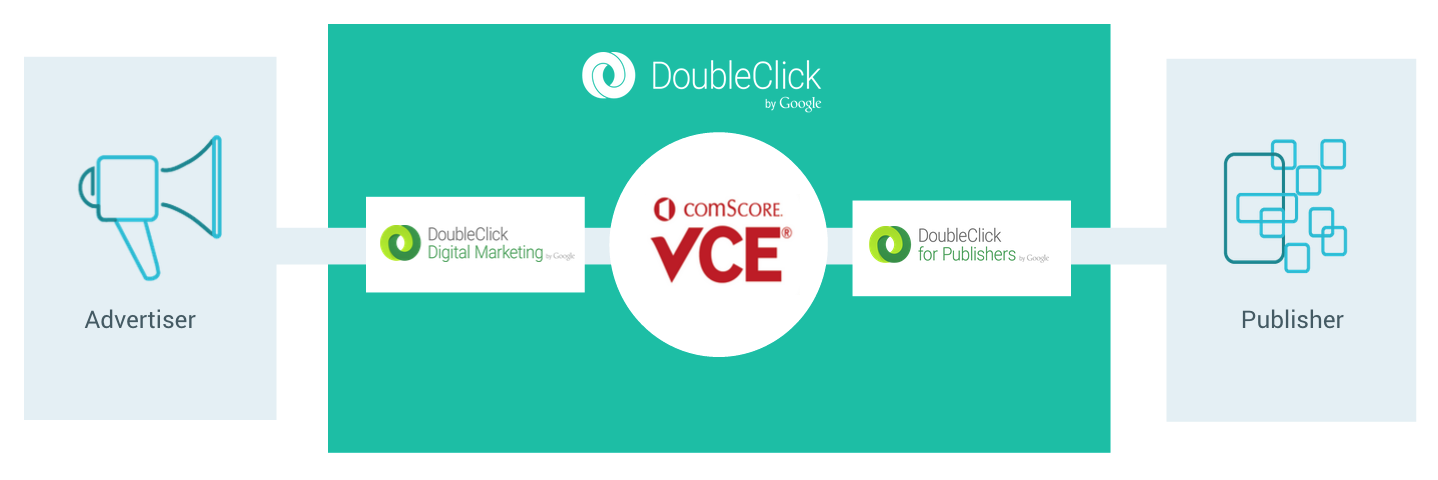
Over the past few years we’ve been committed to investing in a suite of new metrics that would be as actionable for brand marketers as the click has become for performance advertising. In that spirit, today we are announcing a new GRP solution, comScore vCE in DoubleClick, and updates to our Active View viewability solution.

Our goal is to enable brand marketers to answer some essential questions about the success of their campaigns:

Announcing an update to Active View - Ensuring your ads are seen

If a human being never has a chance to see your ad, then nothing else matters - the campaign will not succeed. That’s why we’ve been steadily introducing Active View technology across our product suite: the ability to buy based on viewability in AdWords, and reporting on viewability in our DoubleClick advertiser and publisher platforms. In a recent study that we published we found that 46% of all video ads on the web did not even have a chance to be seen. This contextualized the importance of video viewability and the launch of Active View for Video a few months ago.

We are firm believers in the IAB / MRC standard as the minimum viable definition for a viewable impression. We also recognize that there is a need for secondary metrics that complement the single standard and support individual advertisers’ objectives. In light of this, we are announcing that starting today, Active View users will be able to measure average viewable time - the average time, in seconds, a given ad appeared on screen - in DoubleClick Bid Manager.

Since introducing Active View, we’ve seen tremendous momentum with over 80% of clients having adopted our viewability technology. These advertiser and publisher clients have told us time and again that they would like to use Active View to measure viewability across all their media buys. So we are working with these clients to expand Active View beyond Google’s media and platforms.

Announcing comScore vCE in DoubleClick: Ensuring you reach the right audience faster

Last year we announced our partnership with comScore to bring to market a completely tagless and digitally actionable metric that would make real-time GRP measurement a reality for advertisers and publishers. Today we are announcing the culmination of that partnership: comScore vCE in DoubleClick.

comScore vCE in DoubleClick is the first independent, completely tagless, audience delivery measurement service to be directly integrated into an ad server and will give advertisers and publishers a trusted comScore audience measurement solution for both video and display that is effortless to set up and actionable.
This new GRP measurement solution is now widely available for all of our DoubleClick customers across DoubleClick Digital Marketing and DoubleClick for Publishers. This means advertisers can now see if they’re reaching their target audience as it happens. And publishers will be able to make adjustments during the course of a campaign to meet their advertisers’ needs -- no more after the fact reporting and make-goods.

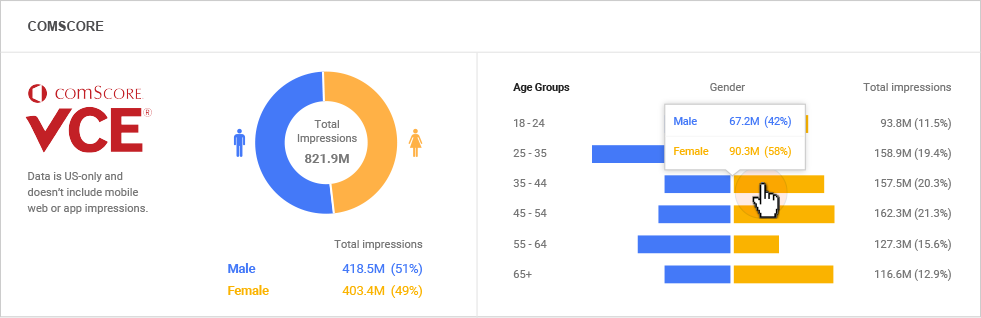
With this tagless and single-click workflow, advertiser and publisher clients will have 100% coverage. Publishers will have the ability to forecast their audience availability to ensure they meet advertiser commitments. For advertisers, in addition to scheduled reports we are introducing new audience cards that surface reports with simple and easy to read visuals.


Measurement Matters

We will continue to look for opportunities to raise the bar on measurement through a combination of product innovation and partnership with industry leaders.

We’re excited about the progress we’ve made in enabling advertisers to ensure that their ads reached the right audience and were actually seen. But our biggest investments in measurement still lie ahead as we work to help advertisers understand what their audiences thought and ultimately did as a result of seeing their ads.
Posted by Sanaz Ahari
Group Product Manager, Brand Measurement, Google

Posted:
While global sales of L'Oréal Luxe makeup brand Shu Uemura were booming, reaching its target audience across North America proved challenging. By collaborating with Karl Lagerfeld (and his cat, Choupette) and using DoubleClick Bid Manager and Google Analytics Premium, the campaign delivered nearly double the anticipated revenue.
Goals
  • Re-introduce and raise awareness of the Shu Uemura cosmetics brand in North America
  • Drive North American sales of Karl Lagerfeld’s Shupette collection for Shu Uemura
  • Grow the Shu Uemura email subscriber list
  • Approach
  • Organized website audiences with Google Analytics Premium
  • Used programmatic buying to lead prospects down the path to purchase
  • Leveraged a range of audience data in DoubleClick Bid Manager to buy paid media in display and social channels
  • Results
  • Drove almost 2X the anticipated revenue
  • Exceeded CPA targets and achieved a 2,200% return on ad spend (ROAS)
  • Increased web traffic and email subscriber
  • To learn more about Shu Uemura’s approach, check out the full case study.

    Posted by Kelly Cox
    Product Marketing Manager, DoubleClick

    Posted:

    Last year we started the Make Mobile Work initiative in partnership with the IAB to foster adoption of HTML5 and cross-screen creative, and it quickly became the IAB Mobile Center’s lynchpin for marketer outreach as interest in the program accelerated.

    For 2015, we’re excited to bring back Make Mobile Work for another round of educational and practical conversations for brand marketers, to help them succeed in our increasingly mobile-first world.The importance of HTML5 for digital marketing continues to be at the center of the Make Mobile Work message, building on the success of the HTML5 Week we hosted last week.

    Make Mobile Work webinars will address three important topics over the remainder of 2015. These webinars are curated with marketer business decision-makers in mind—they will keep the jargon to a minimum and focus on sharing practical examples and learning.


    The IAB’s Tech Lab is also working to update their standard ad units to reflect the file size needs of HTML5-based ads. This is a timely effort as connectivity technologies have changed along with the rise of HTML5 and it’s vital to realign buyer and seller expectations around ad file weights that will enable engaging ads, while not harming webpage or ad-load performance. Make Mobile Work will help to spread the word about this process and its outcomes and implications.

    Along with the other members of the Mobile Center, we’re looking forward to continuing to help brands large and small, novice and experienced, get the know-how they need to make mobile work for them.
    Posted by Becky Chappell
    Product Marketing Manager, DoubleClick